China’s garden statue industry serves a growing outdoor-living market, where decorative pieces face rain, frost, pollution, and temperature changes. Grand View Research’s landscaping products market analysis identifies continued demand for outdoor decorative products, including durable garden features. Houzz’s 2024 U.S. Houzz & Home Study also reported strong homeowner investment in outdoor improvements. These trends make seasonal statue protection more than a decorative concern.
China’s top 10 garden statue types often include stone, cast concrete, resin, ceramic, terracotta, stainless steel, cast iron, bronze, fiberglass, and wood. Each material responds differently to winter moisture. Porous stone may absorb water, while trapped moisture can expand inside cracks during freezing. Ceramic can chip near weak edges. Metal may develop rust where coatings have failed. Resin may become brittle after prolonged cold exposure.
This guide explains how to protect garden statues from winter using practical, material-specific methods. ASTM C666/C666M freeze-thaw testing demonstrates how repeated freezing and thawing can damage concrete materials. The Natural Stone Institute also emphasizes drainage, suitable sealers, and careful surface maintenance for outdoor stone. Still, no product guarantees complete protection. A thick sealer may trap moisture if applied to a damp surface. That mistake is easy to make.
Readers will find storage, covering, cleaning, inspection, and placement advice for all ten statue categories. Small details matter. Raise statues above wet soil. Clear leaves from their bases. Check hairline cracks before temperatures fall. A cautious routine may prevent expensive replacement and preserve the statue’s original texture through another winter.
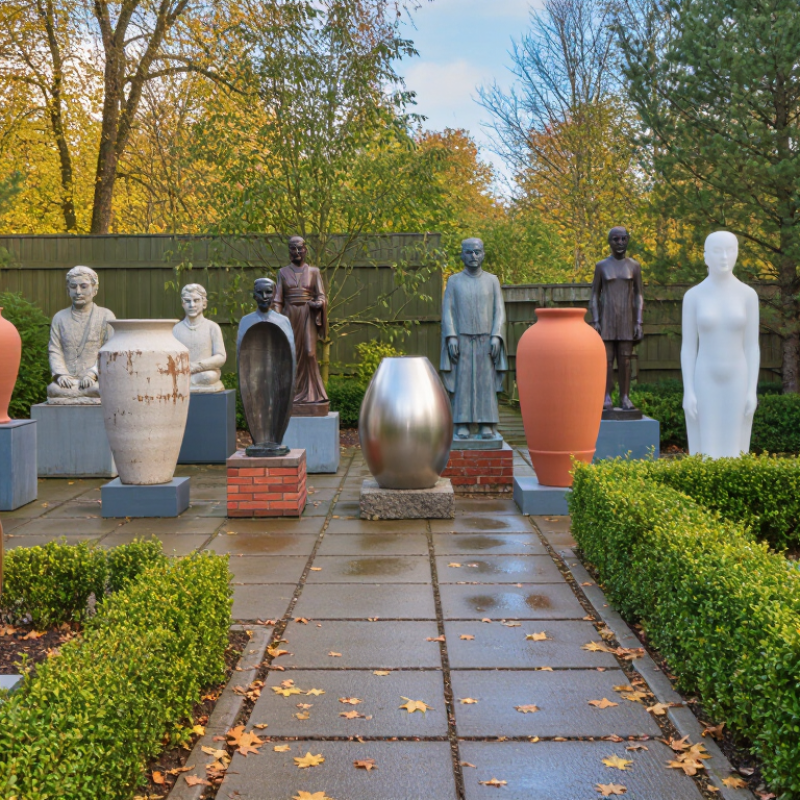
China’s Top 10 Garden Statue Types: Stone, Metal, Ceramic, and Resin
China’s top ten garden statue types include granite, marble, limestone, sandstone, bronze, iron, aluminum, ceramic, porcelain, and resin. Each material reacts differently to freezing temperatures, moisture, and sudden temperature changes. Granite usually handles winter well, but small cracks can widen after repeated freeze-thaw cycles. Marble and limestone need a breathable outdoor sealant because water can enter their pores. Sandstone is more absorbent, so raise it above wet soil with a stable stone base. Keep drainage paths clear.
Metal statues need different care. Bronze develops a natural surface color, while iron may rust quickly around joints and hollow areas. Remove standing water, then apply a suitable protective coating before severe weather arrives. Aluminum resists rust, but its thin parts can still bend under heavy ice. Ceramic and porcelain statues should move indoors when possible. A garage or covered porch is safer than a sealed plastic box. Plastic traps moisture.
Resin statues are lighter and less porous, yet cold temperatures can make them brittle. Store smaller pieces on padded shelves, away from direct sunlight and heaters. For large resin figures, use a breathable cover and secure the base against strong wind. I once covered a statue too tightly, and trapped condensation stained its surface. That mistake changed my winter routine. Inspect every piece before the first freeze, especially around bases, painted details, and repaired areas. Damage often starts where the eye does not look.
| No. | Garden Statue Type | Common Material | Typical Winter Risk | Recommended Protection | Outdoor Winter Suitability |
|---|---|---|---|---|---|
| 1 | Stone Lion | Granite, marble, sandstone, or limestone | Water absorption, freeze–thaw cracking, surface staining, and unstable placement on frozen ground | Use a stable base, keep drainage holes clear, remove standing water, and apply a breathable stone sealer when appropriate | Excellent |
| 2 | Buddha Statue | Stone, bronze, cast metal, ceramic, or resin | Moisture entering pores or joints; painted and gilded details may peel or discolor | Clean before freezing weather, cover delicate finishes with a breathable cover, and avoid airtight plastic wrapping | Good to Excellent |
| 3 | Animal Sculpture | Granite, bronze, stainless steel, resin, or fiberglass | Thin legs, tails, ears, and projecting parts can suffer impact, ice buildup, or wind damage | Anchor tall pieces, inspect joints, remove heavy snow, and store lightweight resin or fiberglass pieces indoors | Good |
| 4 | Metal Heron or Bird | Cast iron, steel, aluminum, copper, or stainless steel | Rust, galvanic corrosion, wind movement, and bending of thin components | Dry thoroughly, touch up exposed steel, lubricate moving joints, and secure the base against strong winter winds | Good |
| 5 | Metal Fountain Figure | Bronze, copper, stainless steel, or painted metal | Frozen water can expand inside pipes, pumps, bowls, and hollow sections | Drain all water, disconnect and store the pump, remove drain plugs where applicable, and cover the dry basin | Moderate |
| 6 | Ceramic Pagoda or Lantern | Terracotta, earthenware, stoneware, or porcelain | Porous clay may absorb water, leading to cracking or spalling during repeated freezing and thawing | Move indoors when possible; otherwise place on a raised, sheltered base and protect from direct rain and snow | Low to Moderate |
| 7 | Ceramic Animal Figure | Glazed ceramic, porcelain, or terracotta | Glaze damage, hidden hairline cracks, and water trapped in hollow forms | Bring indoors before hard freezes; if left outside, seal openings, shelter the piece, and prevent contact with wet soil | Low |
| 8 | Resin Gnome or Fairy | Polyresin, polyurethane resin, or fiberglass-reinforced resin | Brittleness in low temperatures, fading, peeling paint, and cracking at thin sections | Clean and dry the figure, store it indoors or in a frost-free shed, and avoid dropping or bending it when cold | Moderate |
| 9 | Resin Birdbath | Polyresin, fiberglass, or molded composite | Ice expansion, waterline cracking, base movement, and damage to painted surfaces | Empty it before freezing temperatures, invert or store the bowl under cover, and keep the pedestal level | Moderate |
| 10 | Stone or Metal Planter Statue | Granite, concrete, cast iron, aluminum, or steel | Wet soil and trapped water freeze and expand; metal may corrode at drainage points | Empty or reduce saturated soil, clear drainage holes, raise the planter from the ground, and protect exposed metal | Good |
General winter rule: Remove standing water, improve drainage, avoid non-breathable plastic covers that trap condensation, and move porous ceramic or lightweight resin statues indoors before prolonged freezing weather.
Water expands by about 9% when it freezes near 0°C. Inside tiny pores, this pressure can widen cracks. One cold night may not cause visible damage. Repeated thawing is worse.
Limestone, sandstone, concrete, cast stone, terracotta, and ceramic absorb or hold moisture easily. Terracotta and ceramic can split sharply. Granite usually resists moisture better, but carved edges remain vulnerable. Resin and metal have different weaknesses.
Inspect the base, joints, carved edges, and existing cracks. Keep drainage holes open. Empty fountains, basins, and hollow ornaments completely. Small ceramic pieces are safer indoors.
Apply sealer only to clean, dry surfaces. Choose a breathable product compatible with the material. Test it on a hidden area. A coating can trap moisture instead of blocking it.
Use breathable fabric with space around carved details. Avoid airtight plastic. Secure the cover against wind, but do not tighten it around fragile edges. Condensation can become a hidden problem.
Place porous statues on rubber pads or treated blocks. Keep them above wet soil and melting snow. Slightly tilt pieces when their design allows drainage. The base may be weaker than the visible body.
Look for flaking, dark moisture marks, loose joints, widened cracks, and rust stains. Check after each thaw and major storm. Photograph changes if possible. Small changes matter.
Not necessarily. I once assumed weight meant strength, but a hidden base crack widened after repeated thawing. Dry surfaces help, though internal moisture may remain. Winter protection is useful, not perfect.
China’s top 10 garden statue types include stone, metal, ceramic, and resin designs, each responding differently to winter conditions. When temperatures reach 0°C or below, water trapped inside pores and small cracks can freeze, expand, and create pressure that causes chipping, cracking, flaking, or structural damage. Porosity, water absorption, and thermal expansion are key factors in determining a statue’s risk. Concrete and similar materials can also be evaluated through freeze–thaw testing, with 300 cycles serving as a useful durability benchmark.
Learning how to protect garden statues from winter begins with removing standing water and improving drainage. Clean and dry each statue, apply a suitable breathable sealant, cover it with a weather-resistant material that allows airflow, and elevate it away from frozen ground or snow. Fragile ceramic and resin pieces may be better stored indoors, while heavier stone and metal statues should be inspected regularly for cracks, trapped moisture, corrosion, or displaced covers throughout the cold season.

 Beamer Garden