Arranging solar lights in your garden effectively can enhance both aesthetics and safety. According to a recent report by the Solar Energy Industries Association, U.S. solar installations grew by 20% last year. This signifies a growing interest in renewable energy solutions, including garden lighting. In this context, understanding how to arrange solar lights in a garden becomes essential for maximizing their benefits.
Expert landscape designer Emily Roberts emphasizes, “Proper placement of solar lights not only beautifies your garden but also emphasizes its features.” With her experience, she notes that lights should highlight pathways, accentuate plants, and enhance outdoor spaces. However, if not arranged thoughtfully, the result can be bland and less inviting.
Considering the dynamics of light and shadow is crucial. Overlooking how to arrange solar lights in a garden can lead to missed opportunities for creating a warm atmosphere. Too much light can be harsh, while too little can cause safety concerns. Striking a balance between ambiance and functionality is key. As you plan, think about the flow of your garden and the specific features you want to showcase.
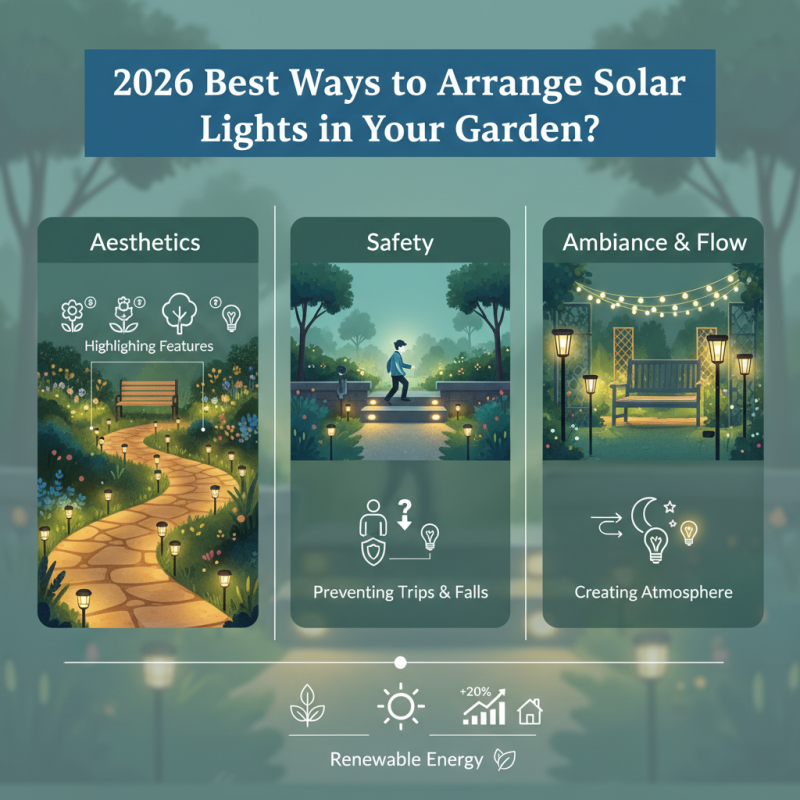
Arranging solar lights in your garden can significantly enhance its beauty. The strategic placement of lights creates ambiance and enhances safety. It is essential to choose areas that need illumination, such as pathways, patios, or flower beds. By highlighting garden features, you can make your space more inviting.
Tips: For effective lighting, aim to create a balanced distribution. Avoid clustering lights too closely together. Spacing them out can add depth to the overall design. Consider using different heights for visual interest. Short lights can illuminate pathways, while taller fixtures can highlight trees or architectural features.
Sometimes, less is more. Over-lighting can distract from the natural beauty of your garden. Instead, focus on key features like a fountain or a large tree. Adjust the lights as seasons change and plants grow. Regularly revisiting your arrangement can help you adapt to your evolving garden landscape. Remember, the goal is to achieve harmony between your lights and the natural elements.
| Arrangement Method | Description | Ideal Locations | Benefits |
|---|---|---|---|
| Pathway Lighting | Placing lights along walkways to guide and illuminate paths. | Garden pathways, driveways | Enhances safety and visibility at night. |
| Accent Lighting | Focusing lights on specific plants or features for emphasis. | Flower beds, sculptures, trees | Creates focal points and adds drama to the landscape. |
| Ambient Lighting | Using soft lighting to create a warm atmosphere in dining areas. | Patios, decks, seating areas | Enhances mood and encourages outdoor gatherings. |
| Spot Lighting | Directing light to illuminate a specific area or object. | Entrances, architectural features | Highlights entryways and creates security visibility. |
| Perimeter Lighting | Installing lights along the outer boundary of the garden. | Garden edges, fences | Defines space and provides a sense of enclosure. |
: Proper placement enhances beauty and safety, creating ambiance. It makes the space inviting and enjoyable.
Focus on pathways, patios, and flower beds. Highlighting specific features adds charm and guidance.
Lights should be spaced apart to avoid clutter. This creates depth and balance in your garden design.
Using short lights for pathways and tall fixtures for trees adds visual interest. Height variation is key.
Yes, over-lighting can distract from your garden’s natural beauty. Focus on key features instead.
Revisit your arrangement as seasons change. Regular adjustments can help your lights match evolving plant growth.
Path lights are great for walkways. Spotlights illuminate focal points. String lights create a festive feel.
Sunlight exposure and battery life influence brightness. Experimenting helps you find the best setup for your garden.
Poor placement can create shadows, hiding beautiful blooms. Take time to find the right spots to showcase plants.
No, take your time. Trust your instincts and enjoy the creative process of designing your garden lighting.
When considering how to arrange solar lights in a garden, it's essential to follow best practices that enhance both functionality and aesthetics. Understanding the various types of solar lights available allows gardeners to select the best options for their specific landscape and positioning needs. For instance, pathway lights should be evenly spaced to illuminate walkways, while accent lights can be used to highlight plants or features.
Maximizing energy efficiency is crucial; placing lights in areas with optimal sunlight exposure ensures they perform well into the evening. Additionally, creative arrangements, such as clustering lights or creating patterns, can significantly boost the garden's visual appeal. Lastly, safety considerations should not be overlooked—ensuring that lights are positioned to avoid hazards while providing adequate illumination is vital for a welcoming garden space.

 Beamer Garden